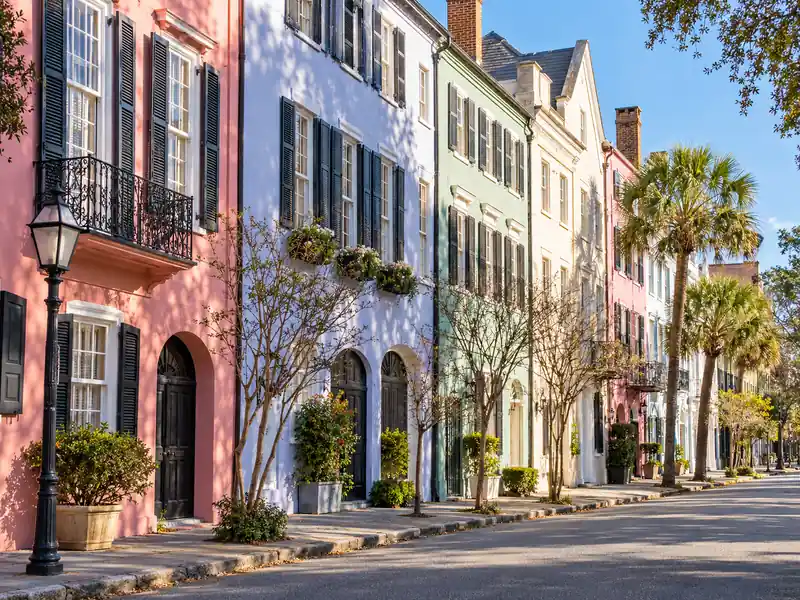
From the Blue Ridge foothills to the tidal creeks of the Lowcountry, South Carolina’s landscapes shape its food, architecture, and everyday traditions. Charleston’s pastel houses and the coast’s Gullah Geechee heritage offer different perspectives on the state’s identity.
Long before European settlement, Catawba, Cherokee, and other Indigenous peoples inhabited this region. English colonists established Charles Town in 1670, and rice and indigo plantations expanded through the forced labor and agricultural knowledge of enslaved Africans. South Carolina became the eighth state in 1788, following a significant role in the American Revolution. In 1860, it became the first state to secede from the Union; the attack on Fort Sumter opened the Civil War the following year. Reconstruction, segregation, and the struggle for civil rights shaped subsequent generations. Textile manufacturing later transformed the Upstate, while Gullah Geechee communities maintained enduring cultural traditions along the coast. Today, manufacturing, agriculture, and tourism contribute to an economy that has changed considerably since the plantation era.

Explore its coastal neighborhoods and inland towns to discover how South Carolina’s landscapes and communities continue to carry, question, and reinterpret that past.