Wyoming opens out into sagebrush plains, broad river valleys, and mountain ranges that rise sharply against the sky. From the Tetons to the grasslands farther east, its landscapes help explain a culture shaped by distance, ranching, and close ties to the land.
Long before European American fur traders arrived in the early nineteenth century, this land supported Indigenous peoples including the Eastern Shoshone, Crow, Cheyenne, and Lakota. Emigrant trails and the transcontinental railroad later brought settlers, transforming communities and intensifying conflicts over Native homelands. Ranching and mining helped shape the territory’s economy, while Yellowstone’s designation as a national park in 1872 marked a milestone in conservation. In 1869, Wyoming Territory granted women voting rights; it retained them when it became the 44th state in 1890. The Eastern Shoshone and Northern Arapaho maintain living traditions on the Wind River Reservation. Energy production, agriculture, and tourism have continued to shape Wyoming, alongside ongoing debates about land, water, and conservation.
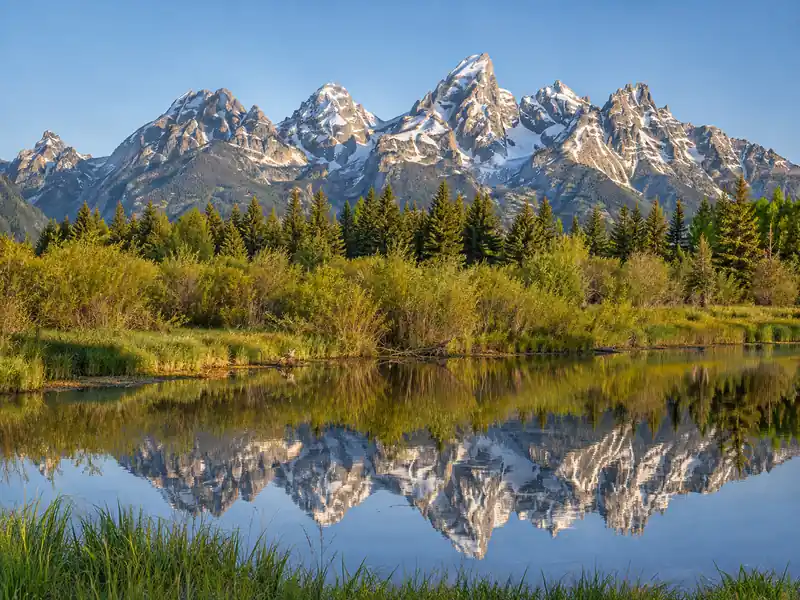
Exploring Wyoming means getting to know both its open spaces and the communities whose stories give those landscapes meaning.